This piece is a look back at how that journey started. Beginning with a workshop in Northumberland in late 2022, a few key conversations, and the moment I realised I’d been coasting. It’s also a small thank you to Teamwork Photo for the advice, support, and gentle nudges that helped turn curiosity into a completely different way of working.
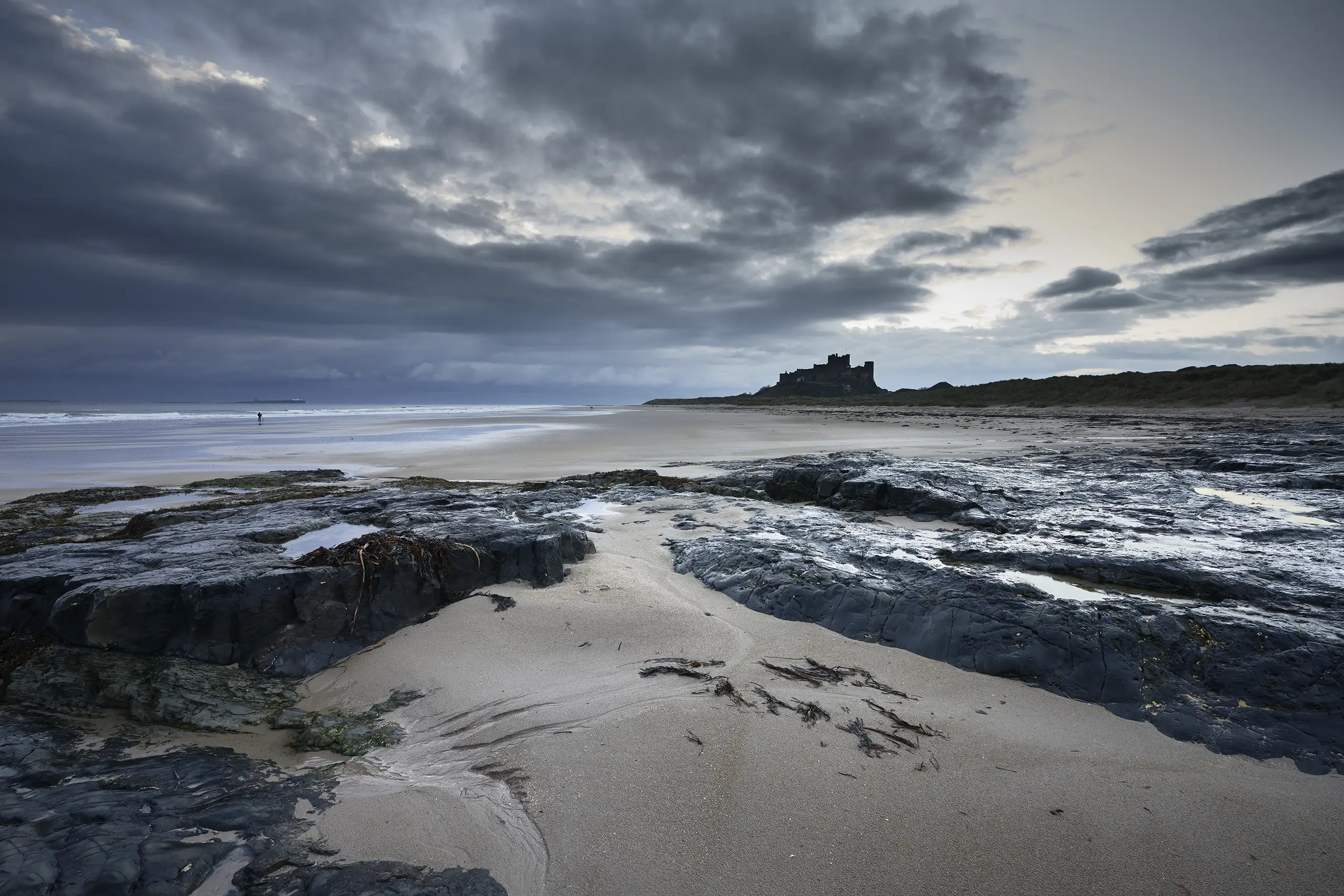
Landscape photography, in particular, became my reset button. It’s the opposite of agency life. Slower, quieter, and completely unforgiving in the best possible way.
And over time, that’s what led me down an unexpected rabbit hole and my ‘discovery’ of technical camera systems, movements, and the kind of deliberate image-making you don’t stumble into by accident.
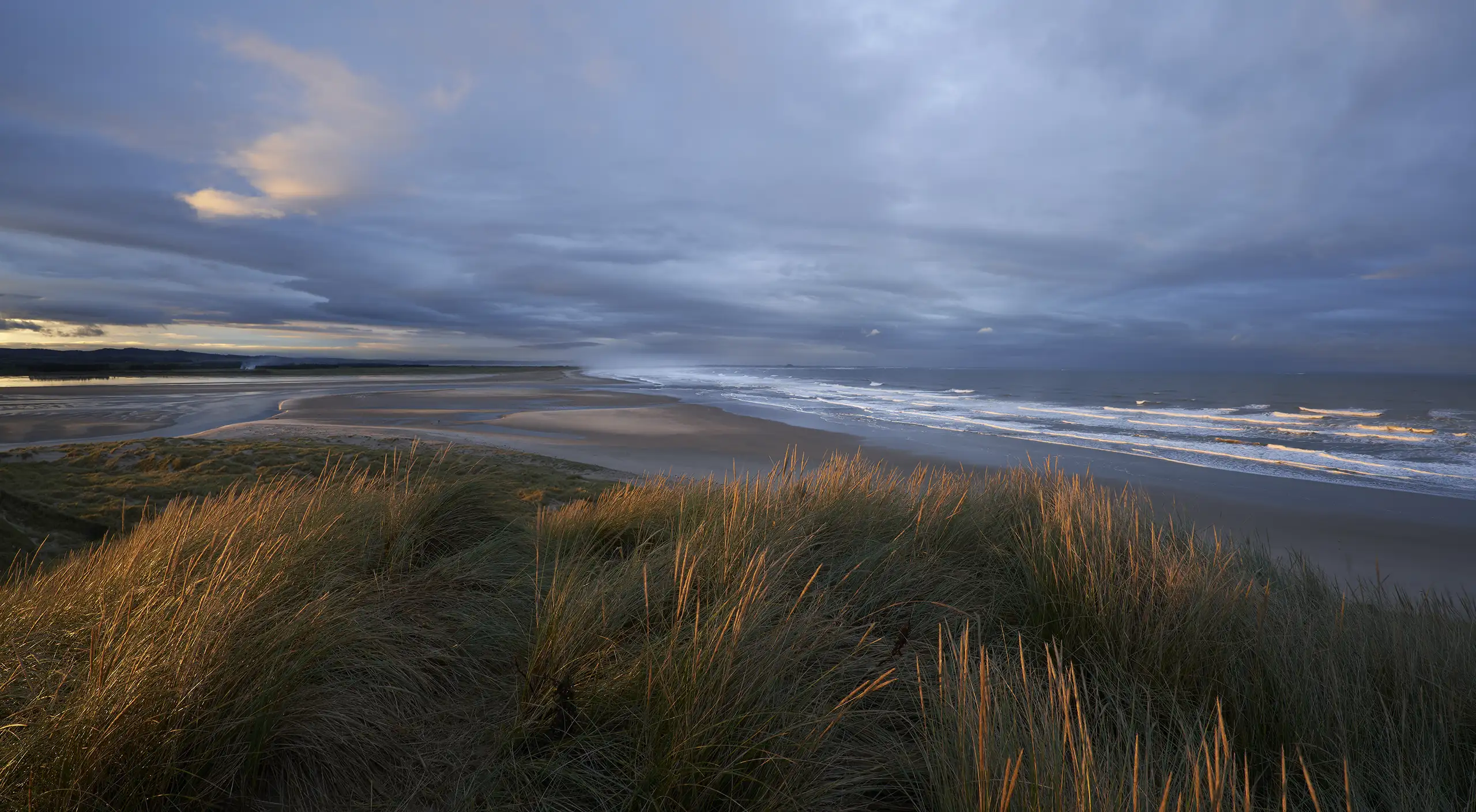
Sunset at Budle Point
My first proper encounter with Teamwork Photo came off the back of a many-times delayed Phase One Photography Experience in Northumberland in November 2022. Most of the group were Phase One users, but a few of us were there with standard DSLRs and mirrorless setups.
At the time I’d recently switched from Canon to Sony and was shooting on a Sony A7R IV. I’d become fascinated by the idea of using my Sony as a “digital back” on a tilt and shift technical camera. Once that seed was planted, it wouldn’t go away.
The conversation carried on after the workshop, and with help from the Teamwork Photo team, my kit (and my approach) evolved considerably.
So rather than presenting this as a gear review, I thought it would be more useful to retell it as a story. Because this journey wasn’t really about equipment. It was about learning to slow down, be more intentional, and rebuild the way I make images.
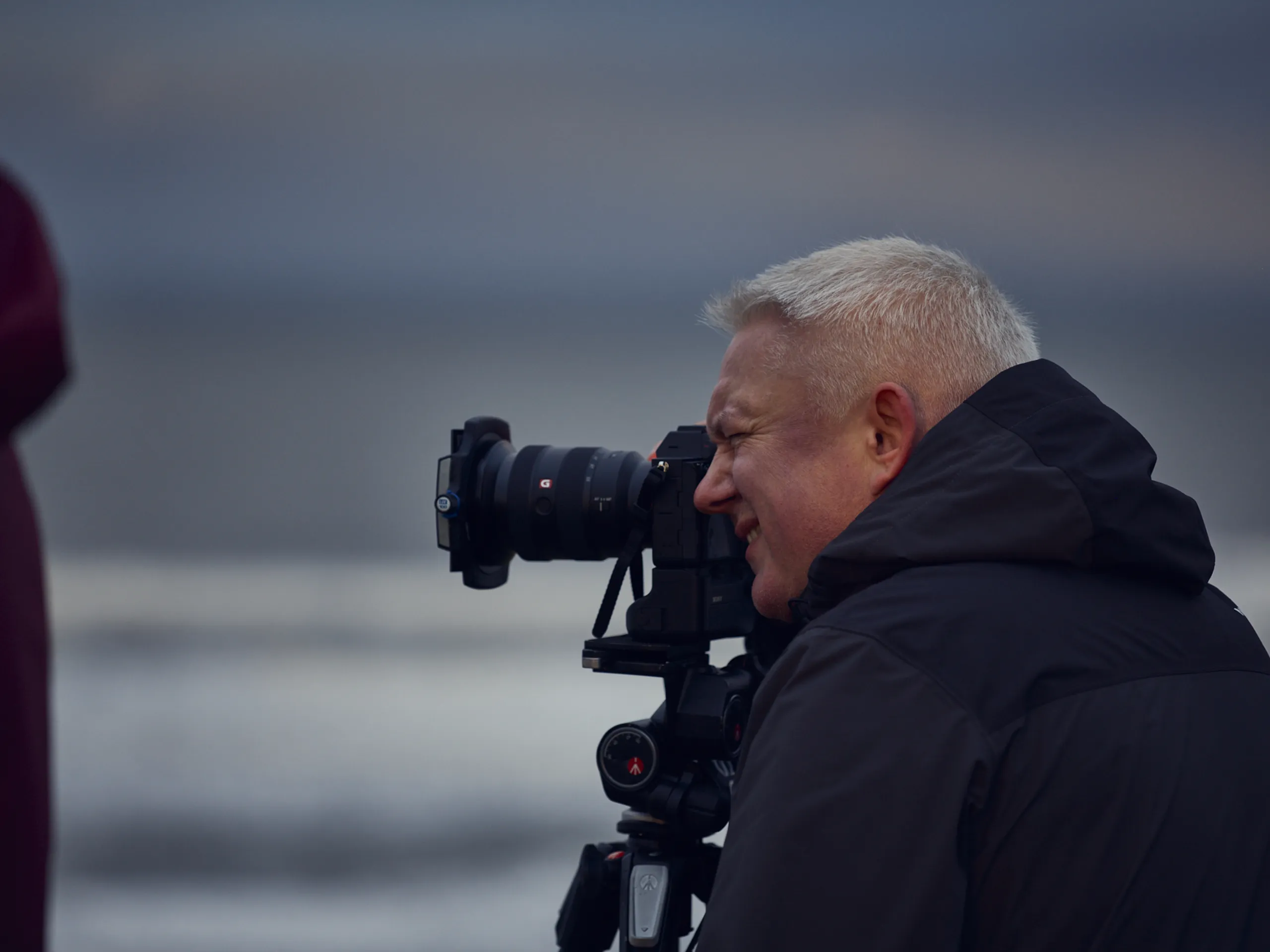
In action in Northumberland with my Sony AR7iv, and 16-35mm Lens.
Photography has been a thread running through my life for over 30 years.
It started at college, then university in Manchester in the mid-90s. Using darkrooms and with studio lighting setups during the days of chemical-stained fingers and hot lights. From there, I spent years art directing commercial shoots, working alongside some seriously talented photographers on creative campaigns. I could direct a good shot, and I’d knew I already had a decent grasp of the finer technical stuff too.
Over the last 20 years I started stepping out from behind the scenes and picking up the camera for commercial work. In effect I would art direct myself. I poured that experience into my landscape work too, shooting on Canon DSLRs. Wide. Sharp. f/16. The kind of images that felt and looked good enough at the time.
Then, in November 2022, I had a bit of a reset.
I spent a weekend on an experience with Joe Cornish (a name that needs no introduction) and realised I’d been coasting. Or to put it another way, living in a bit of a photographic bubble.
What I learned that weekend reshaped how I see photography. Not just technically, but in how I make images.
I remember during a review session Joe looked at one of my 16mm shots and said it felt too wide, yet oddly sharp.
That comment stuck with me.
Seeing the work from the Phase One IQ4 users really hammered it home. I suddenly started questioning everything. “my process, my tools, my assumptions.
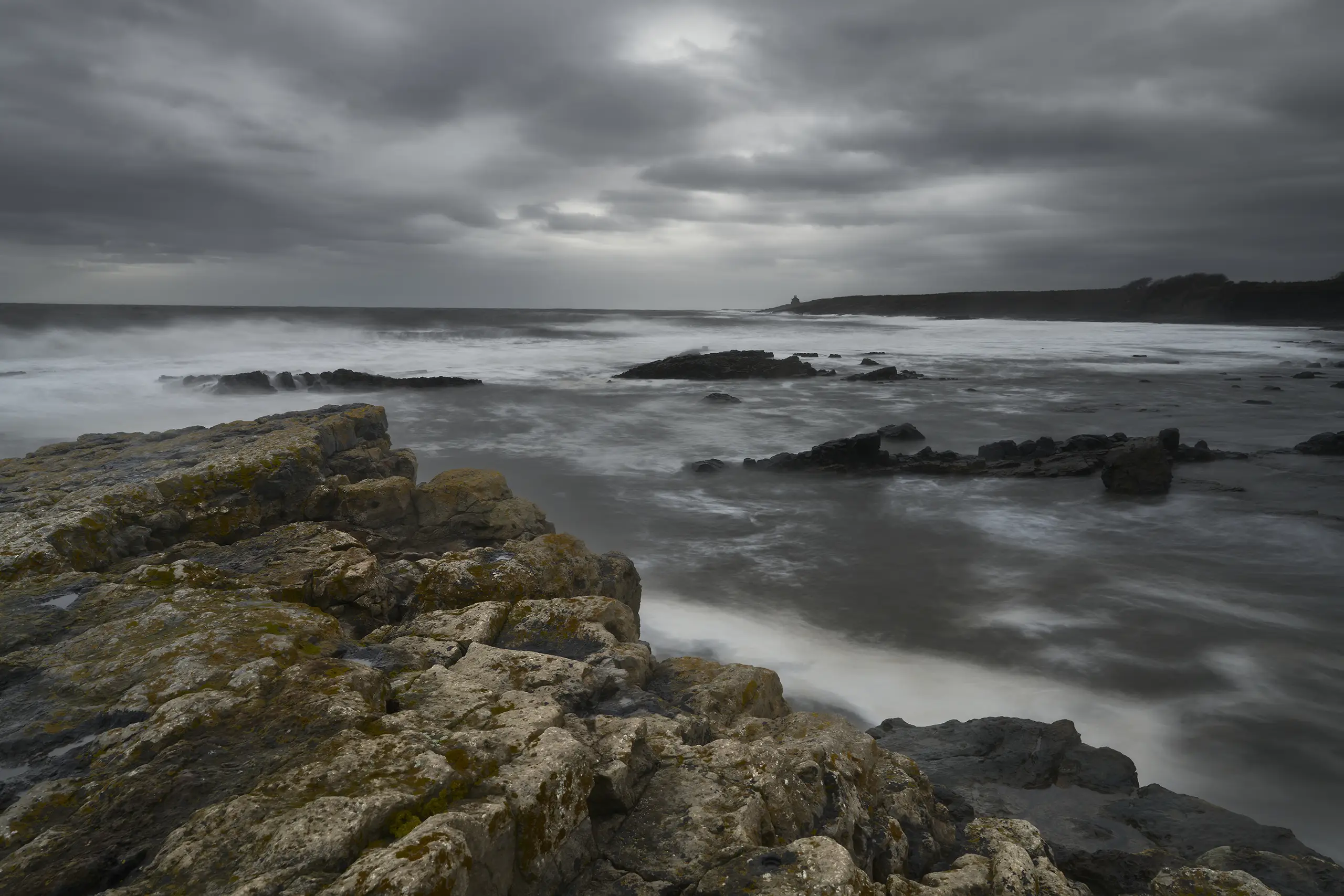
The Bathing House Alnwick
Medium format wasn’t really an option for me, but the Teamwork Photo guys suggested a different route: adapting my Sony A7R IV onto a Cambo Actus-G system.
I honestly didn’t even know that was possible.
The setup they recommended was the Actus-G, paired with the Cambo Actar-19mm — and, very kindly, a note to upgrade my aging tripod (which, let’s be honest, had no business being trusted anymore).
I remember Paul Reiffer saying, “You’re going to have a LOT of (frustrating) fun with that for the next few months — and then it’ll click you into top gear.”
He wasn’t wrong.
Let’s just say the learning curve was very, very steep.
In the early days, just getting a sharp image felt like an achievement.
Even now, three years in, I’m still learning how to use the system efficiently. But there’s real joy in that — in knowing there’s always more to discover. Spending more time with Joe in the North York Moors and around Robin Hood’s Bay, and more recently in the Peak District helped cement some of the principles.
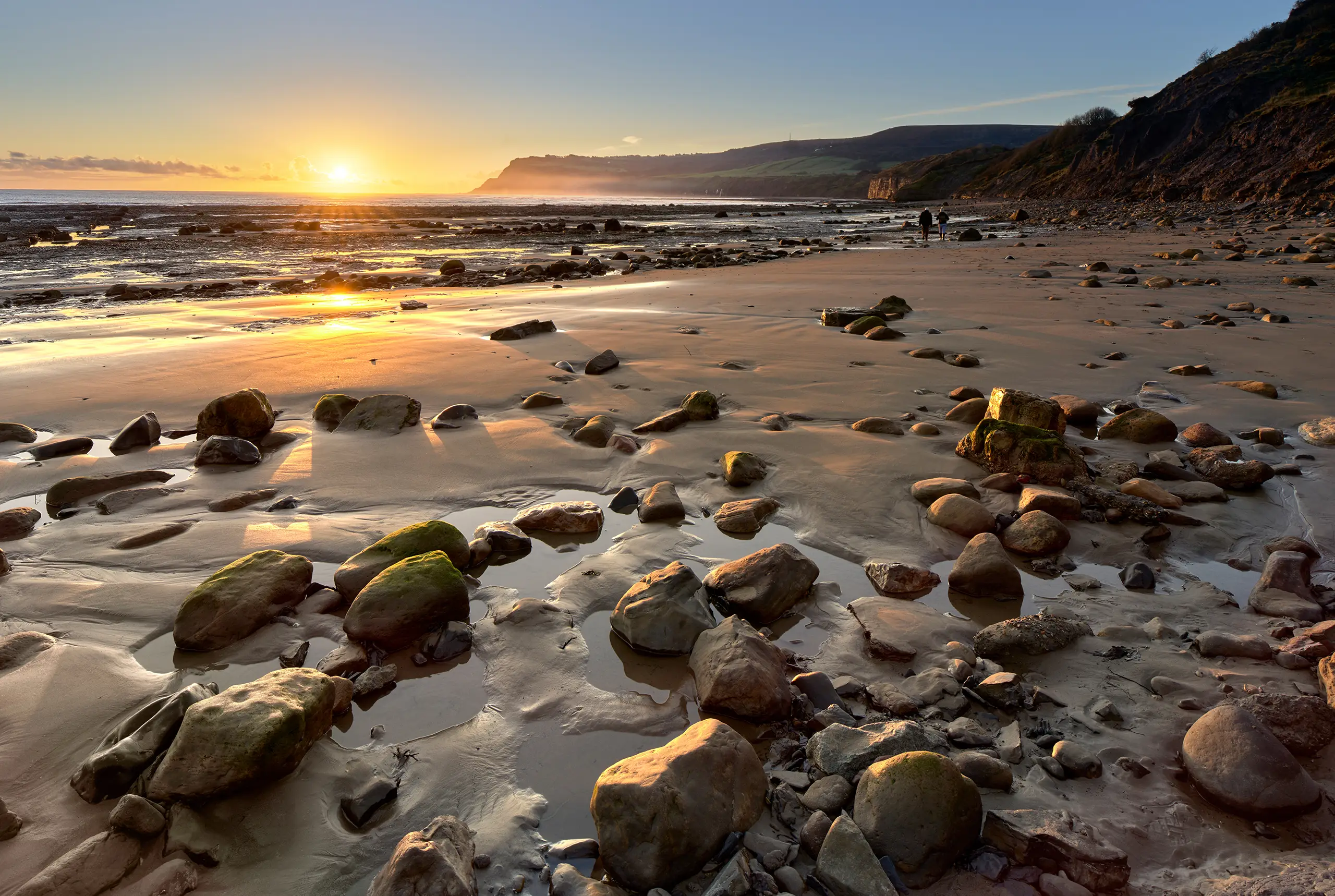
Autumnal Sunrise at Robin Hood Bay
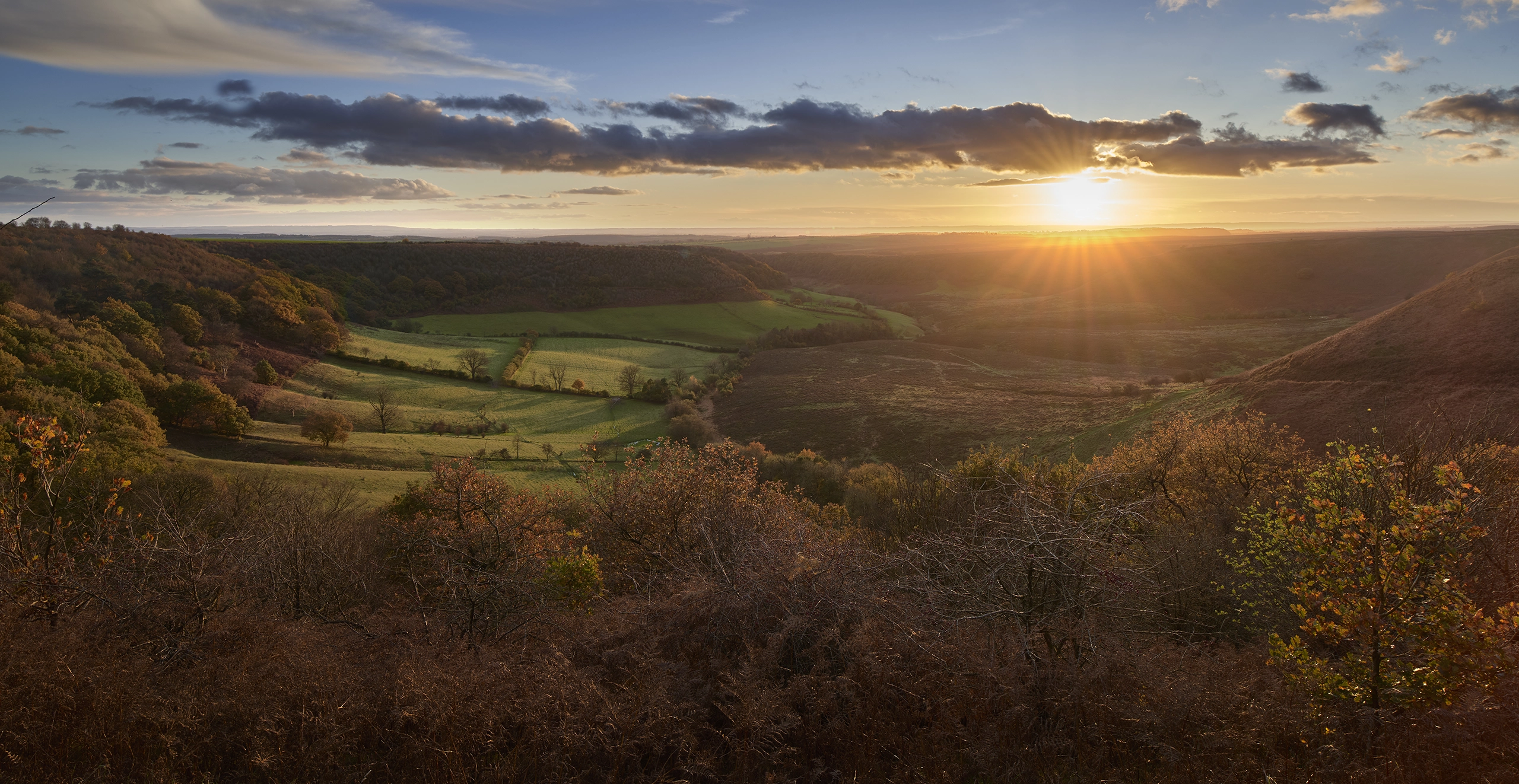
Hole of Horcum Sunset
The question you are all desperate to know is has using the Actus-G changed my process, and my images?
It changed everything.
Tilt, shift, rise and fall. Suddenly the lens wasn’t a fixed eye, it was something I could craft an image with. Using lenses at their sweet spot (f/8–f/11) and still achieving sharpness to infinity was a revelation. It’s also changed what I carry.
My current lens lineup is Actar-19, Silvestri 35mm, Rodenstock Digiron 70mm, and the Cambo 90mm. But beyond the gear, it’s my approach that’s really shifted.
I don’t rush anymore. I try to take the time to wander and explore more. Rather than hunting for endless compositions, I slow down and actually see.
The technical camera forces that, because setting it up isn’t quick, and that’s a good thing. It makes you commit.
And the RAW images and the detail, the fidelity, and the rendering are on another level. Same sensor, but a completely different result.
It’s brought back a quiet joy to the process too. With the pace of agency life and family always in motion, photography has become a bit of a retreat giving me space to climb a hill, breathe in, and make something considered.
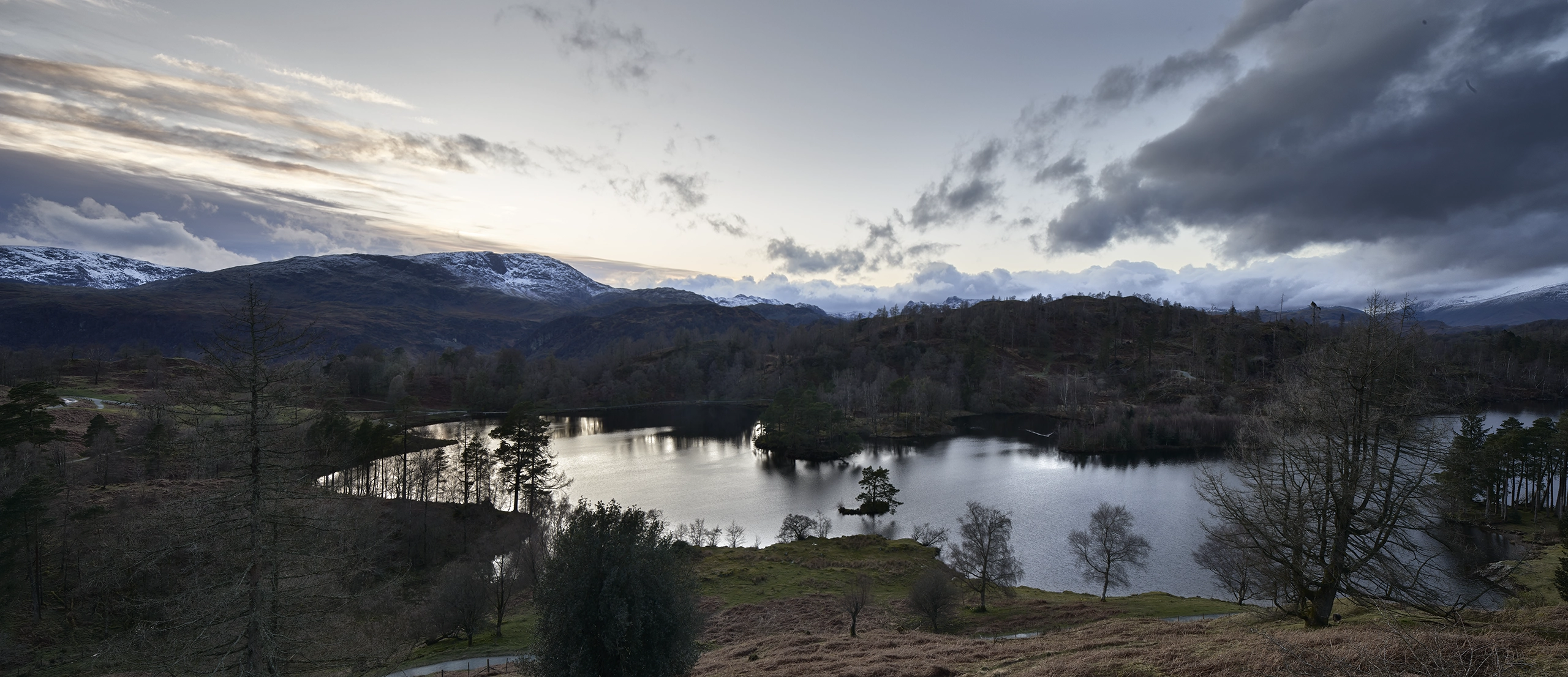
Tarn Hows Lake District
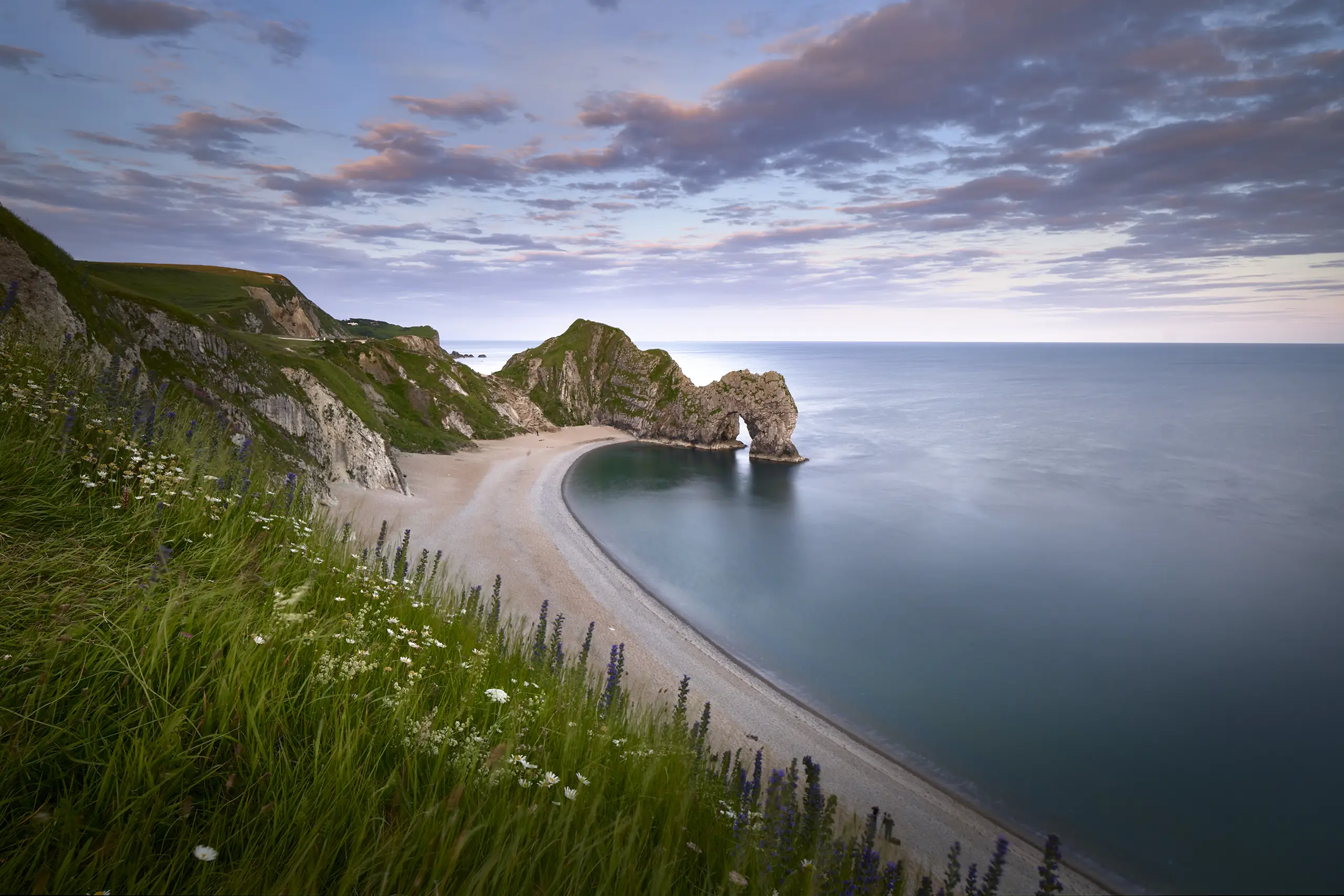
Durdle Dor Sunset photo
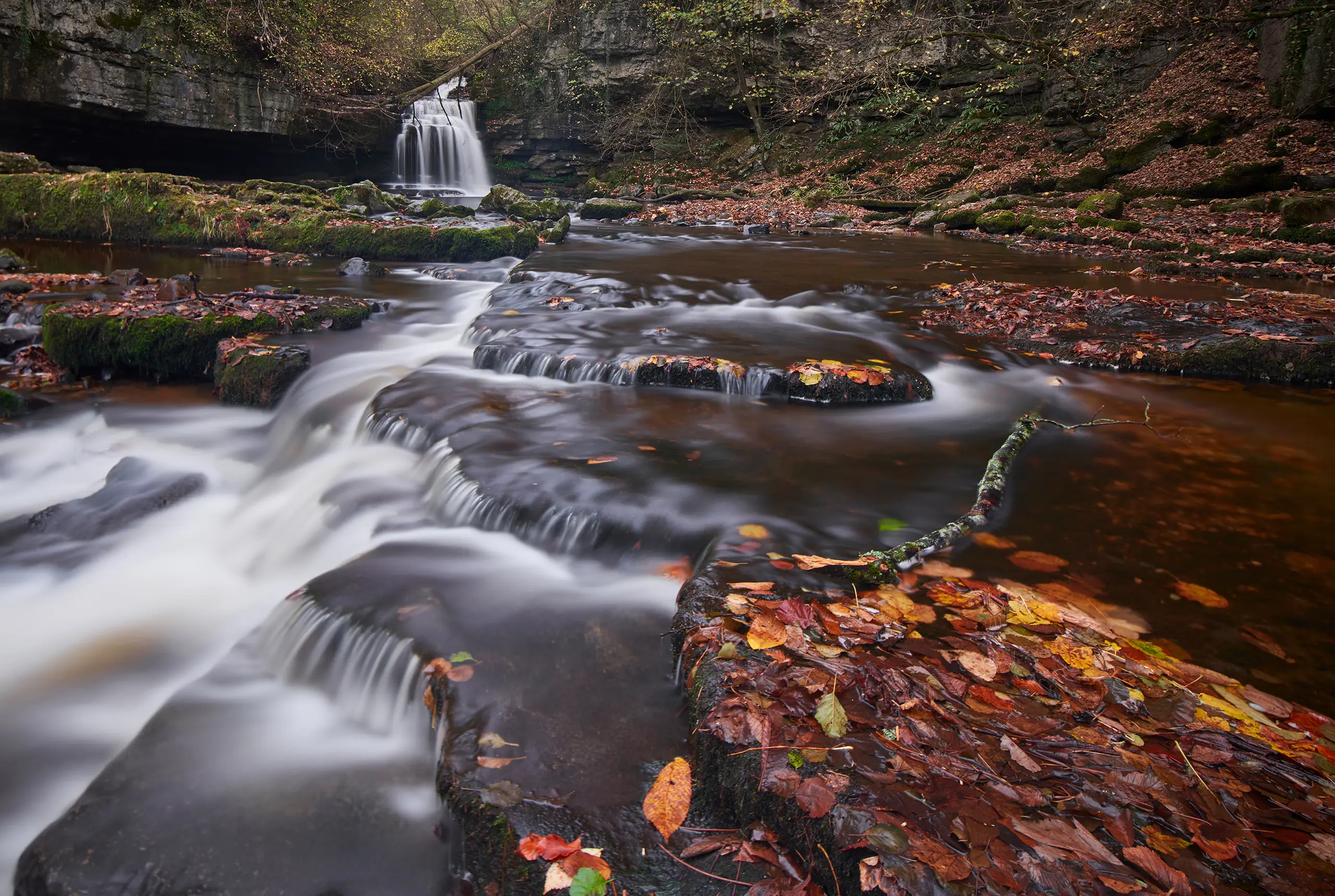
Cauldron Falls, West Burton, Yorkshire
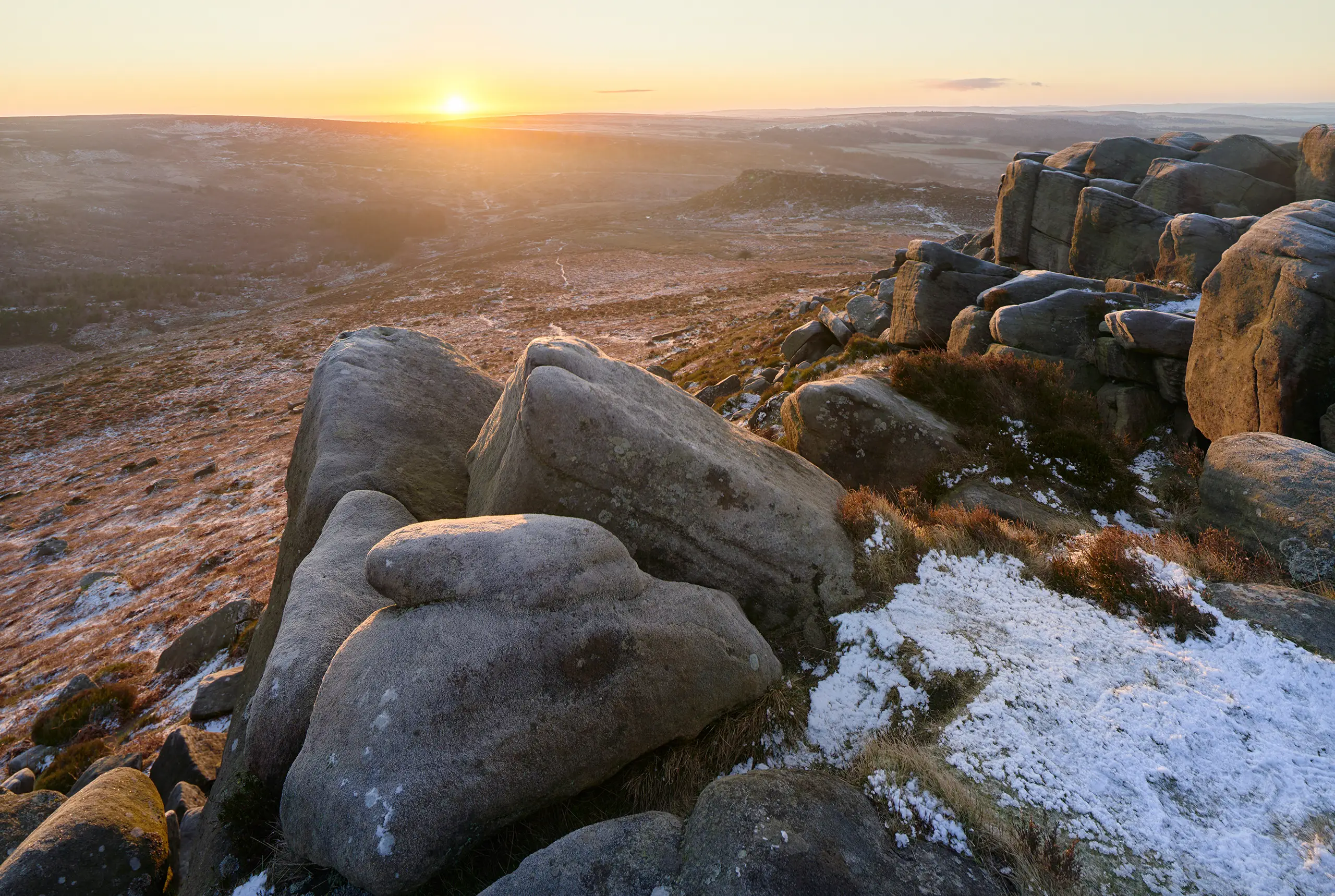
Higger Tor Sunrise, Peak District
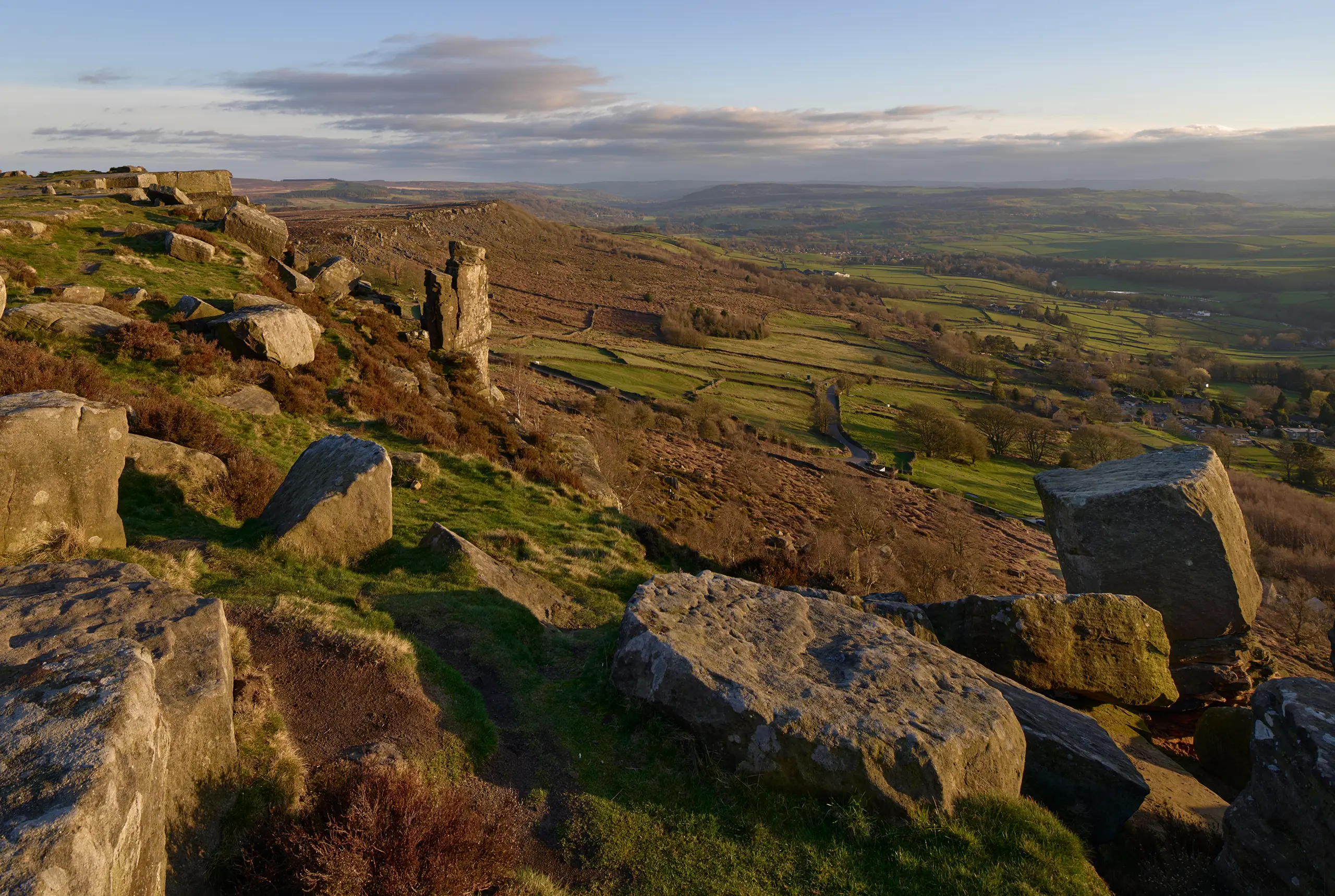
The Pinnacle Stone – Curbar Edge
Over the years I’ve been fortunate to collaborate with some brilliant commercial photographers, but landscape photography is a different kind of pursuit.
It’s not boxed in by time constraints in the same way, or brand guidelines and deadlines. The only limits are light and patience.
That shift in mindset came from working with a learning from people like Joe Cornish and Paul Reiffer. Spending time with Joe, Paul, and Al Simmons from Teamwork Photo genuinely changed the course of my photographic life and I came away not just with sharper images, but new friendships too.
If there’s one thing this journey has taught me, it’s that moving to a technical system isn’t really about chasing perfection or better kit. It’s about changing how you see and how you work. It forces you to slow down, be intentional, and really engage with the process of making an image.
Having the right people to talk things through makes all the difference. The advice and support from Teamwork Photo and the conversations that followed that first experience, helped turn curiosity into something practical and genuinely rewarding.
If you’re thinking about technical cameras but aren’t quite sure where to start, having an honest, experience-led conversation is often the most important first step.
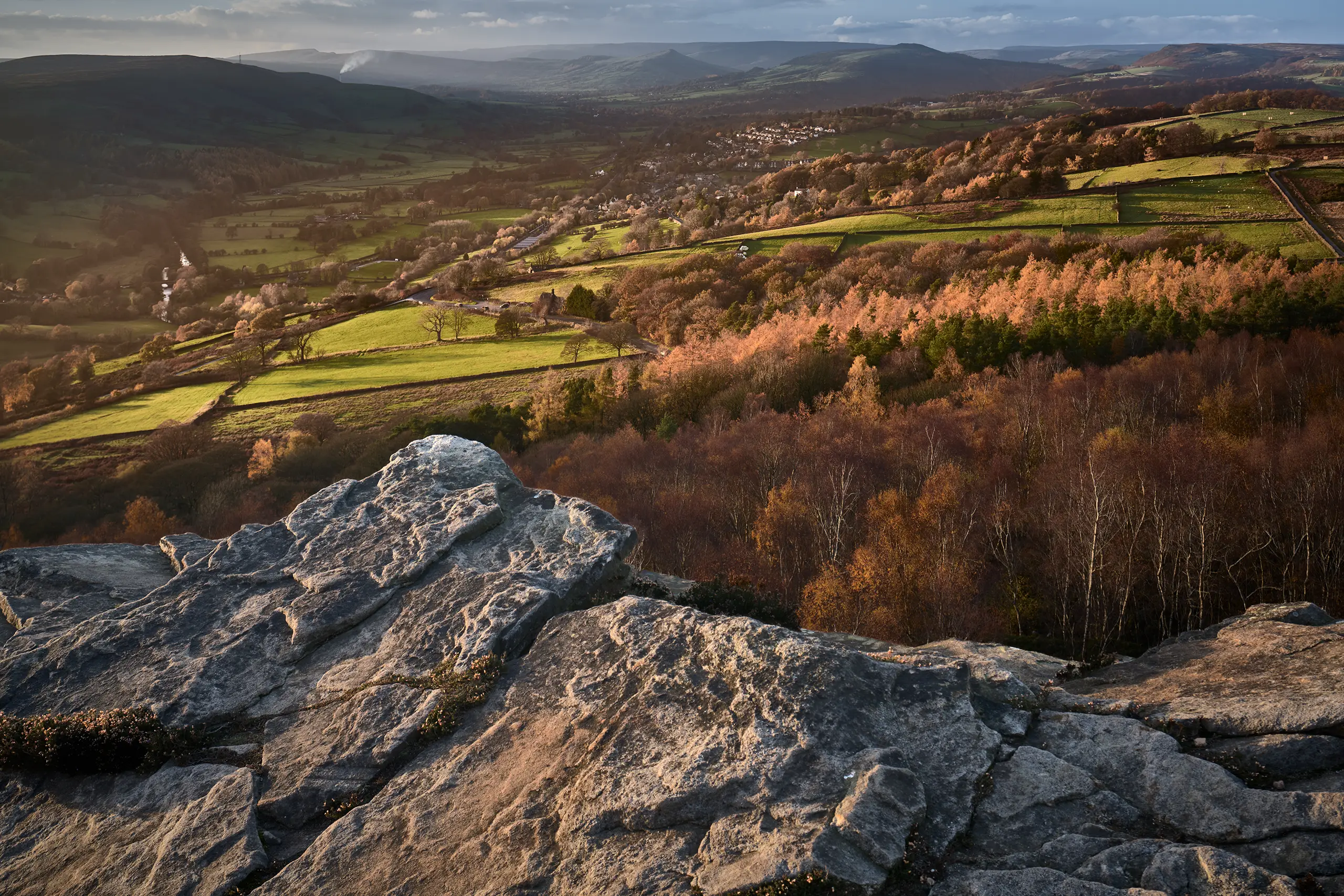
Millstone Edge, Peak District, shot with the Silvestri 35mm
Read the latest…
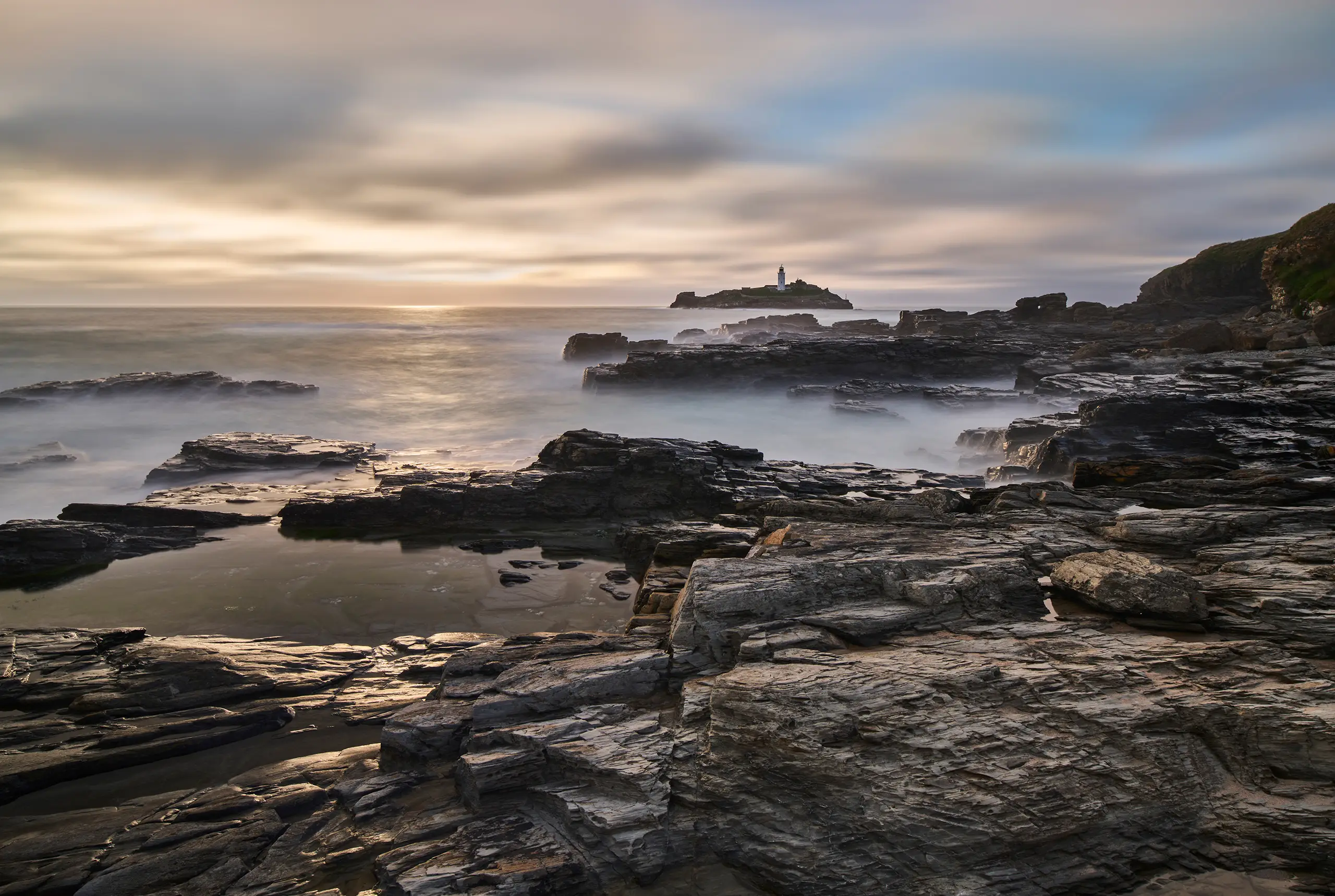
Reflections on My Outdoor Photography Magazine Interview
A recent interview with Nick Smith of Outdoor Photography Magazine gave me the chance to reflect on how design, composition and a love of the outdoors shape my landscape photography today.
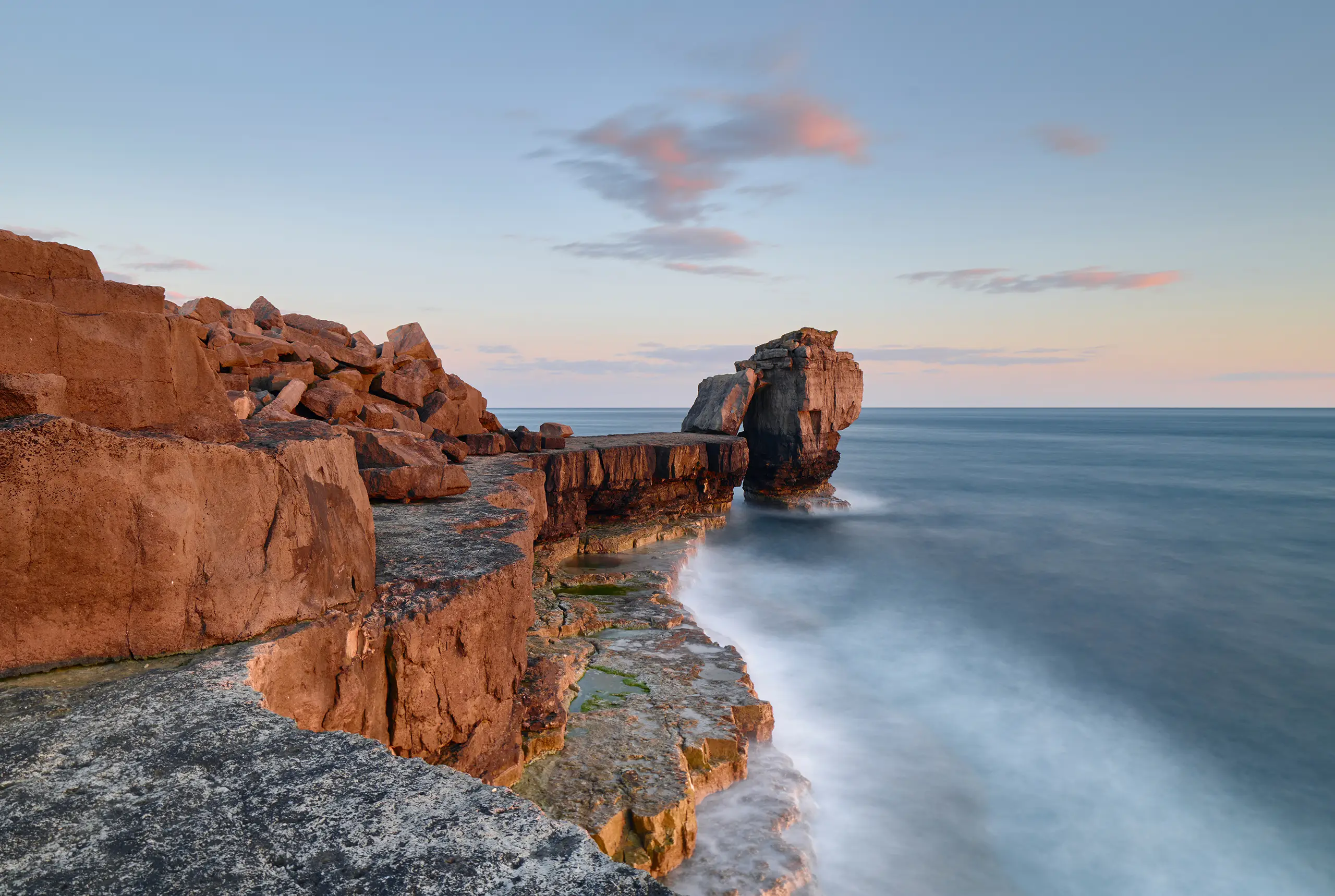
Paul Grogan ABIPP Awarded Associateship by the British Institute of Professional Photography
Paul Grogan ABIPP has been awarded Associateship by the British Institute of Professional Photography for outstanding landscape photography. Discover his award-winning portfolio and professional accreditation.
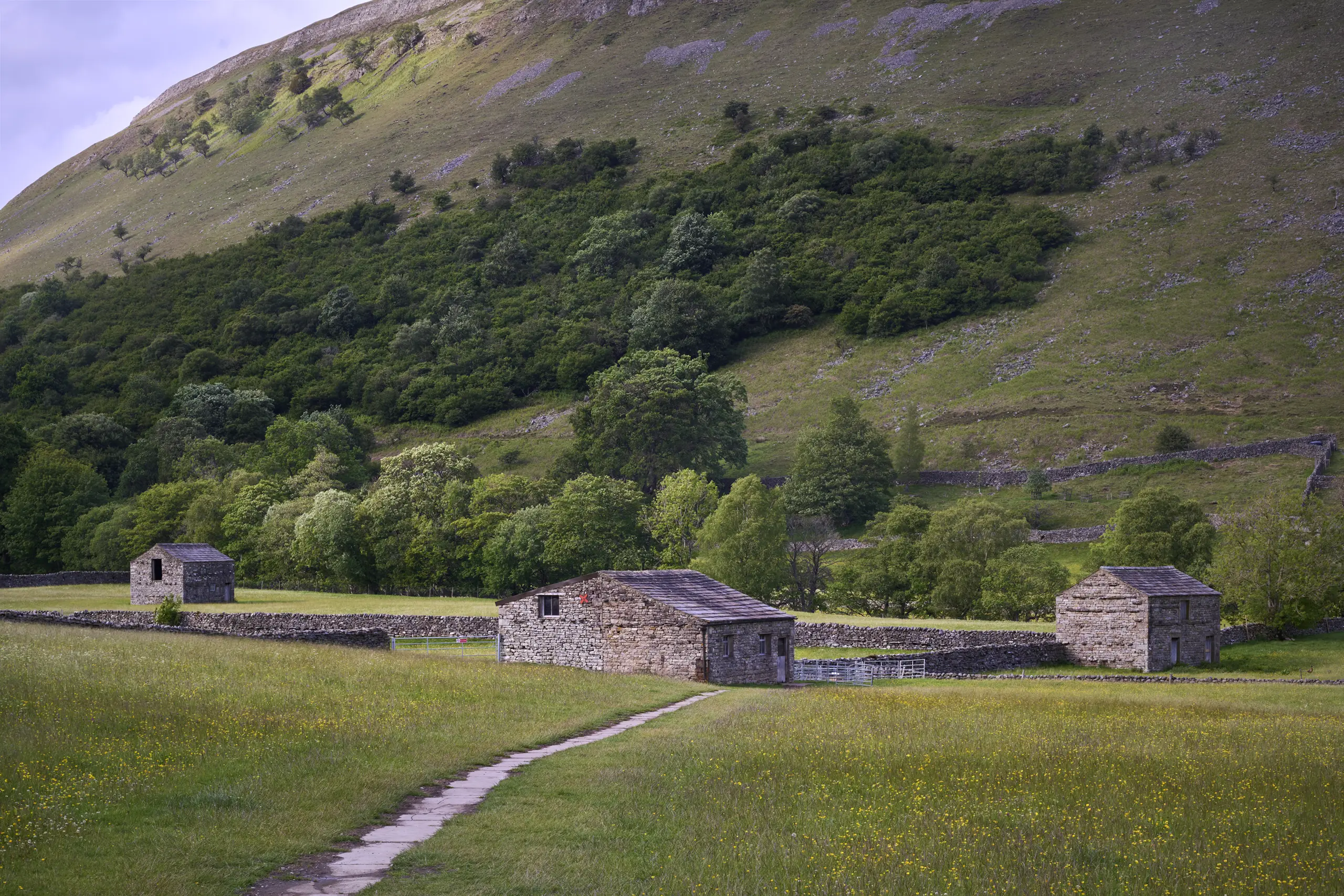
Muker Meadows, a first visit in wildflower season
For years, Muker Meadows in Swaledale had been on my list of places to photograph, but until recently, I’d never managed to visit at just the right time. This summer, I finally stepped into those meadows at peak wildflower season, and it was every bit as magical as I had hoped — even if the blooms were showing the effects of a dry spell.